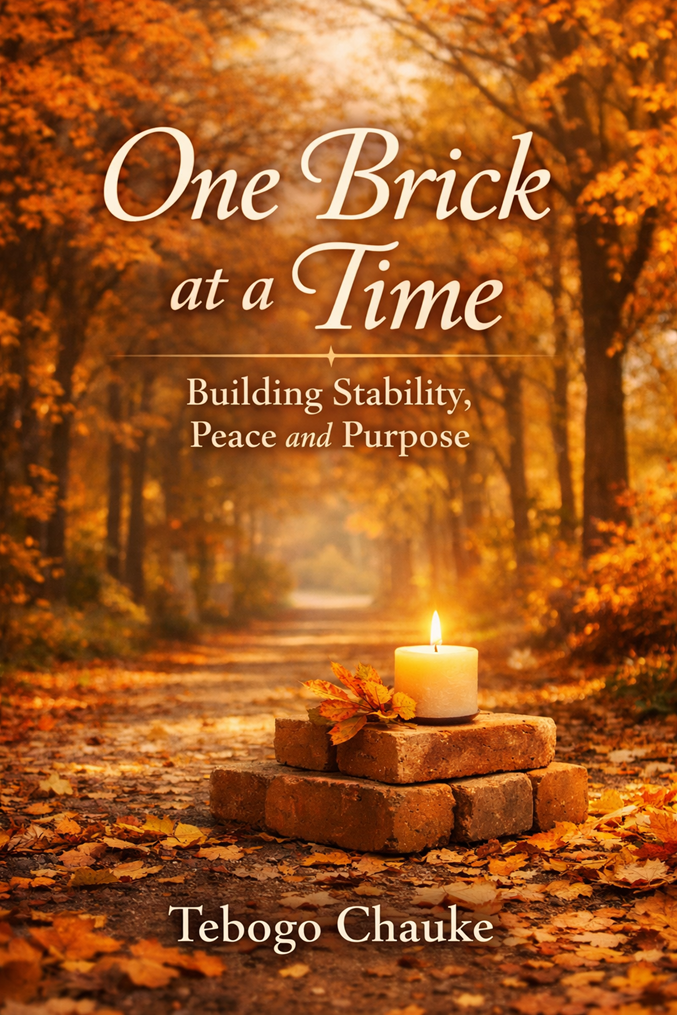
WHY THIS BOOK EXISTS
Life can feel heavy, even for me, even for those of us who strive daily to live with intention. Even when you are disciplined, spiritual, and giving, praying, fasting, journaling, writing, caring for others, and showing up as a responsible adult. There are moments when the mind whispers, “You’re not doing enough. You’re behind. Something is wrong. Something is missing.” For many of us, these thoughts come quietly but their weight is real. They can make us doubt ourselves, our purpose, and even the progress we’ve made. They can make us feel like we are failing, even when we are walking a path of deep intention, love, and spiritual growth. This book is for the spiritual seekers, the caregivers, the healers, the parents, the writers, the dreamers, and anyone who is navigating life with heart and soul but still feels unsettled. It is for those who want to honour their discipline and spiritual practice, yet long for peace, stability, and confidence in their daily lives. Together, we will explore how to build stability, not as a far-off goal, but as a daily practice. We will learn to calm our minds, trust our intuition, and take practical steps toward creating safety and security, spiritually, emotionally, and financially. We will uncover how small, consistent actions can reshape our lives, rebuild trust in ourselves, and remind us that we are already doing enough. This is not a book about perfection. It is not about doing more, faster, or better. It is about honouring the life you are living right now, recognizing the small victories, and taking one brick at a time toward a life of stability, peace, and purpose. By the end of this book, my hope is that you will feel encouraged, grounded, and empowered to take one intentional step each day, and in doing so, realize that you are exactly where you are meant to be on your journey.
THE FULL LIFE YOU’RE ALREADY LIVING
Pause for a moment and look at this example, then write down your own list.
• Praying
• Meditating
• Fasting
• Doing spiritual cleansing
• Managing your thoughts
• Resting when needed
• Raising and bonding with your kids
• Walking or gym
• Journaling
• 9 to 5 job 5 days a week
• Cooking and cleaning
• Supporting and showing up for others
Even when we are living fully praying, fasting, meditating, etc. Our minds can still whisper that we are not doing enough.
This is a natural pattern, where our brains are wired to prioritize safety, and for many of us, safety is closely tied to financial security. It doesn’t matter how disciplined, spiritual, or giving we are, if we perceive a lack of stability in our finances, our minds interpret it as a threat. Therefore, this becomes a response to a perceived danger, and our brains will now try to protect us. It is the fear response speaking louder than the reality of our accomplishments. Even when we are actively building a meaningful life, creating love and growth around us, and nurturing our spiritual and emotional health, our brain can still focus on what is uncertain, what feels incomplete, or what hasn’t yet manifested. This is why so many spiritual, disciplined, and purposeful people still feel unsettled. It is not a reflection of failure. It is simply the human mind doing its job, keeping us alert to potential risks.
The key here is to recognize this voice for what it is: a warning, not a verdict. When we understand that our sense of “not enough” is rooted in a desire for safety rather than an actual lack, we gain the power to respond consciously, rather than being controlled by fear. By bringing awareness, practical steps, and spiritual grounding into our lives, we can quiet that whisper, honour our accomplishments, and slowly shift our minds from fear and scarcity to trust, presence, and confidence.
NAMING YOUR FEAR
The first step toward stability is to look clearly at what truly scares you. Fear has a way of hiding in the shadows, whispering in your mind, and creating anxiety without a clear shape. It can feel like a heavy weight you carry, but when left unnamed, it has power over your life because your brain doesn’t know how to respond. For many of us, this fear is financial. The worry about bills, savings, or providing for ourselves and our children. For others, fear might show up as health concerns, family responsibilities, or questions about life purpose. No matter its form, the first step is to give it a name.
Why naming it matters?
Your brain works better when it has a clear target. A vague “something is wrong” creates endless worry and energy drain. So, naming fear brings it into the light, where it can be understood, managed, and transformed.
Naming fear:
It illuminates the unknown. Fear thrives in uncertainty. Giving it a name turns a shadow into something tangible. Once you know what it is, you can see it for what it really is, a challenge, a signal, or sometimes even a false alarm. It allows action. You cannot fight what you cannot define. When your fear is named, you can start mapping steps to manage it. For instance, if your fear is “not having enough money to pay bills,” you can create a plan, budget, savings, side income, or financial advice. If your fear is health-related, naming it may prompt a check-up, lifestyle change, or therapy. It reduces internal chaos. Fear loves vagueness; it feeds on mental loops and “what if” scenarios. By labelling it, you interrupt that cycle and regain control. Your brain no longer wastes energy guessing, it can focus on strategy, problem-solving, and emotional regulation.
How to do it?
Write it down – Use a journal, notebook, or piece of paper to write down your fear. Speak it aloud – Say the fear gently to yourself. Hearing it aloud removes some of its power. This might sound silly I know. Be specific – Don’t just say “money” or “stress.” Go deeper: “I fear not being able to provide for my family next month.” “I fear failing to fulfil my spiritual purpose.” “I fear not having peace in my home.” Exercise: Write one sentence: “The area I feel most unsafe in is ___________.” Once you name it, pause and breathe. Acknowledge it without judging yourself. This is not your weakness, naming it takes courage and strength, so it can’t be your weakness. Naming fear is the first brick in building your path toward stability, because only when you see it clearly, you can begin to take steps to move past it.
Reflection Prompt:
How long have I been carrying this fear silently? How does naming it change the way I feel right now?
Spiritual Anchor:
Say a quiet prayer: “God, help me face this fear with clarity and courage. Guide me to the next step toward peace and stability.”
ACCEPTANCE AS THE FOUNDATION
When it comes to building stability and peace, acceptance is the foundation. It is often misunderstood, many people think acceptance means giving up, surrendering to failure, or settling for less. But in truth, acceptance is courage in action. It is the willingness to see your life as it is, without judgment, without guilt, without trying to force perfection, and without comparing yourself to anyone else. Acceptance is like saying to yourself that, “This is where I am right now, and I will begin from here, not from where I wish I were.”
Acceptance
Stops the internal struggle. Fighting against reality drains energy and increases stress. Acceptance allows your mind and body to settle, creating space for clarity and practical action. It frees you from guilt and shame. When guilt says “I should have done better.” And Shame says “I am failing.” Then, acceptance says “I am human, and I am allowed to start from here.” It creates a foundation for growth. You cannot build stability on denial or fantasy. When you see where you truly are, you can begin to make intentional, realistic steps toward improvement. Spiritually, acceptance is trusting that your life is unfolding in its own time. It is understanding that fear, struggle, and challenges are not signs of weaknesses, but they are opportunities to grow in faith, resilience, and wisdom. When you accept your current reality, you align yourself with the truth of the present moment. You stop fighting against what is and begin working with what is. This alignment brings peace, clarity, and energy to take the next step. Therefore, we need to acknowledge our reality without judgment. This means looking at your life exactly as it is, with honesty and compassion. Notice the challenges, the uncertainties, and even the fears, and simply accept them as part of your present moment.
Affirm your starting point.
Speak it aloud in prayer, meditation, or quietly whenever fear or doubt arises. Let your words root you in reality. When life feels heavy, overwhelming, or full of pressure, take a moment to centre yourself. Pause and breathe. Inhale deeply, noticing your present reality. Exhale slowly, letting go of resistance, guilt, and the need to control everything. Let your breath remind you that you are alive, you are present, and you are allowed to begin where you are. It is important to distinguish acceptance from complacency. Acceptance does not mean doing nothing. It does not mean giving up, ignoring responsibilities, or settling for less. Instead, it is the courage to start from reality rather than from guilt, shame, or fear. Once you accept where you are, action naturally follows. Your energy is no longer trapped in denial or self-criticism, and you can move forward with clarity, purpose, and confidence. Acceptance is not passive either, it is empowering. It is the foundation from which all growth, stability, and peace emerge. When you begin from acceptance, every step you take is grounded in truth and intention. The power of acceptance is that, acceptance becomes the bridge between fear and action, between worry and peace, between anxiety and clarity. When you accept where you are, you no longer expend energy fighting reality. That energy becomes your power to act, to grow, and to take the next step with confidence.
SMALL WINS, BIG IMPACT
Creating stability in life does not always come from huge leaps or dramatic changes. True momentum, lasting confidence, and inner peace often emerge from small, consistent wins. These small wins may seem insignificant at first, but their impact compounds over time. Each step you take builds trust in yourself and proves to your mind that you are capable of handling life, even in the areas that feel uncertain. Small wins matters because:
They create momentum.
Large goals can feel overwhelming, making us freeze or procrastinate. But, small wins are manageable, achievable, and provide immediate feedback that you are moving forward.They reinforce your confidence.
Because every small action you take reminds your mind that you can handle this. You are capable. Confidence is built not by perfection, but by repeated intentional steps.They reduce overwhelm.
When fear and uncertainty loom large, breaking life into small, practical wins keeps you focused and grounded. Examples exercise: Here are some simple, actionable steps that create real impact:Save R50 this week
Because, even a small amount builds your emergency fund over time. It tells your mind that you are creating safety for yourself.Pay off one overdue bill>
Because, clearing just one financial obligation reduces stress and gives a sense of accomplishment.Spend one hour on income-generating work
This could be a side hustle, freelance project, or even a small creative venture. There is no shame in earning a little extra to support your day-to-day survival. Every effort, no matter how small, is a step toward freedom and stability.
Declutter one area of your home.
Most people don’t realize that clearing our physical space helps clear our mental space.Complete a small task you’ve been avoiding
Whether it’s sending an email, making a phone call, or organizing documents, finishing small tasks gives you a psychological lift. Small wins are not just practical, they are spiritual practice. Every action you take toward stability is a step in faith. By acknowledging your progress, you honour your discipline, your resilience, and your ability to steward your life responsibly. Each win, no matter how minor it seems, is a brick in the foundation of your life. Spiritual and emotional growth often requires patience, and these small wins are the daily evidence that your efforts are meaningful. How to Create Your Own Small Wins PlanIdentify one area to focus on this week.
Finances? Organization? Health? Income?Choose one or two small actions.
Don’t overwhelm yourself with a long list. Start small.Track your progress.
Use a notebook, planner, or phone reminder to check off your small wins.Celebrate every step.
Acknowledge your courage and consistency. Even a small win is proof of your ability to move forward.Reflect and adjust.
At the end of the week, note what worked and what felt empowering. Build on it the next week.BUILDING YOUR SAFETY NET
One of the most powerful ways to feel grounded, secure, and confident in life is to build a financial safety net. This isn’t about wealth, luxury, or comparison to others. It’s about creating a foundation of stability that allows your mind and spirit to relax, even when uncertainty arises. Even a small buffer can transform fear into trust in your system. Knowing that you have something set aside, no matter how modest, gives your brain proof that you are capable of protecting yourself and your loved ones. Safety Net: reduces stress and anxiety. Financial uncertainty is one of the biggest sources of worry for most adults. So, a safety net, even a small one, signals to your mind that you have resources to rely on. Safety Net: builds confidence in your decision-making. When you know you have a buffer, you can make choices without panic. You’re no longer reacting to fear, but you’re responding with clarity and purpose. Safety Net: reinforces consistency over comparison. Building a safety net is not about impressing anyone. It’s about showing up for yourself day after day, consistently investing in your own stability. Steps to Build Your Safety Net
Determine your essential expenses.
Calculate what you spend each week or month on food, bills, transportation, child-related needs, etc. This becomes the foundation for your buffer.Start small and grow gradual.
Even saving R50 per week counts. Small, consistent deposits accumulate over time. Think of it as planting seeds, you won’t see a full tree overnight, but it will grow steadily.Use a dedicated account or a jar.
Keep your emergency funds separate from everyday spending. A digital account you can’t access freely, or a physical jar in a safe place, helps prevent impulse use.Prioritize consistency over size.
It’s not about how much you save at once, it’s about showing up consistently. Regular repeated action builds trust in your ability to manage money, which builds peace of mind.The Mind-set of a Safety Net
Building a safety net is an act of self-respect and spiritual alignment. It’s like telling yourself that “I honour my needs. I am taking responsibility for my life and my peace.” This discipline also teaches your brain to shift from fear and scarcity to trust and abundance. Each small deposit, no matter how tiny, reinforces your capability and resilience. Consider your safety net as a bridge between today and tomorrow. Even if life feels uncertain, you are actively creating a structure that will protect you and your loved ones. Remember: it’s not about who sees your progress, but about how consistently you are building yourself up. A safety net is more than money. It is peace of mind, freedom from constant worry, and a spiritual anchor in your life. Each small step you take toward saving, planning, or organizing finances is another brick in your foundation of stability.Remember that momentum comes from consistent, intentional action not perfection.
ALIGNING ACTIONS WITH VALUES
Living intentionally isn’t just about doing, it’s about doing the right things in alignment with who you are and what you truly value. Stability, peace, and purpose are not built by keeping busy alone; they are built when your actions reflect your deepest beliefs, your spiritual practice, and your personal priorities. When you act in ways that match your inner truth, tasks feel lighter, and your energy is renewed rather than drained. Misaligned actions like doing something just because it seems necessary or expected can create subtle tension and lingering dissatisfaction. Life is full of demands, distractions, and obligations. When you know your values, it becomes easier to prioritize what matters most, and to say “no” to what does not. Each time your actions match your values, you reinforce trust in yourself. This trust builds confidence, reduces anxiety, and strengthens your sense of purpose. Identify your core values. Take time to reflect: What matters most to you? Assess your daily actions. Look at your typical day and week. Ask yourself: “Does this action reflect my core values?” Prioritize alignment. Start small. Even one aligned action per day builds momentum. Remove misaligned tasks when possible. Let go of obligations or habits that drain energy without supporting your values. This is not selfish, it’s called, self-respect and intentional living. Alignment is a form of prayer in action. Each choice you make, big or small can be a reflection of your spiritual principles. Acting in alignment is a way of honouring the life, gifts, and purpose you have been given. When your actions align with your values, your life becomes a living prayer. You no longer act out of fear, scarcity, or external pressure. You act from integrity, faith, and intention. Practical Exercise: Write down 3–5 core values that define who you are.
Review your daily or weekly schedule. Identify one action that aligns and one that doesn’t. Adjust your focus so that, over time, more of your day reflects your core values. Celebrate small victories. Even tiny shifts matter, they build consistency, integrity, and inner calm. When your life is aligned with your values, stability comes naturally, not because everything is perfect, but because you are living with intention, integrity, and self-trust. This alignment magnifies every other effort you make, financially, spiritually, emotionally, and relationally, because your energy flows toward what truly matters.
Your foundation is stronger when every brick is placed with intention.
PROTECTING YOUR ENERGY
Your energy is sacred. It forms the foundation of your focus, creativity, spiritual practice, and emotional wellbeing. Without protecting it, even the most disciplined and intentional life can feel draining, overwhelming, and chaotic. Protecting your energy is not optional, it is essential for building stability, peace, and purpose. Everything you do, whether praying, meditating, working, or caring for others, is amplified or diminished by the state of your energy. When your energy is protected and nourished, your actions become more effective, intentional, and meaningful. Conversely, unprotected energy leads to burnout. Constantly giving, worrying, or responding to external pressures without boundaries can leave you feeling exhausted and disconnected from your spiritual self. When you manage your energy intentionally, your mind becomes clearer, your emotions more balanced, and your decisions wiser. By treating your energy as sacred and creating daily practices to preserve it, you create the space to show up fully for yourself and others, while maintaining the stability, focus, and peace needed to live a purposeful life. Set boundaries. Say “no” to people, tasks, or events that drain you without serving your purpose. Boundaries are a form of self-respect, not rejection. Prioritize spiritual anchors. Daily prayer, meditation, and journaling are not optional, they are essential tools to recharge your mind and spirit. Protect these practices like you would protect an important appointment. Manage media and information. Social media, news, and constant notifications can overstimulate and disturb your peace. Limit your exposure and curate what you allow into your mind. Nourish your body. Rest, proper meals, and gentle movement are spiritual practices as much as physical ones. Your energy is tied to your body, so treat it as sacred.
Practice mental decluttering. Let go of repetitive worry, negative self-talk, or unresolved conflicts. Use journaling, prayer, or meditation to release thoughts that drain your energy. Surround yourself with supportive energy. Engage with people who uplift, inspire, and align with your values. Minimize time with those who constantly drain or destabilize your spirit. Protecting your energy is a form of stewardship. Just as you care for your children, your spiritual and physical responsibilities, and your environment, you must care for your own energy. It is a sacred resource given to you for a purpose, to love, create, heal, and grow. Think of your energy as a vessel. When full, you can pour love, guidance, and presence into every area of your life. When empty, even your best efforts feel heavy or ineffective. Protecting it ensures that you can show up fully for yourself and others. Practical Exercise: List three energy drains in your life, it can be people, tasks, or habits. Identify one small boundary you can set this week to reduce that drain. Commit to protecting one spiritual anchor daily. Reflect each night: Where did I protect my energy successfully today? Where can I improve? Remember that your energy is your most valuable resource. When protected, it fuels your spiritual connection, emotional balance, and practical actions. Every choice you make to guard your energy strengthens your foundation for stability, peace, and purpose.
Protecting your energy is not avoidance, it is preparation. It is creating space to show up fully for the life you are building, one brick at a time.
MOMENTUM THROUGH CONSISTENCY
Discipline and consistency are the engines that turn your small wins, aligned actions, and protected energy into lasting stability and peace. Momentum does not come from bursts of effort or occasional bursts of motivation, it comes from showing up every day, even imperfectly, for the life you are building. Consistency is not about perfection, is about commitment, like choosing your values, your practices, and your small wins, over and over, until they become a natural part of your life. Just like small financial savings grow into a safety net, consistent spiritual, emotional, and practical actions accumulate to create real change. One hour of focused work today, meditation tomorrow, journaling next day? These actions multiply over weeks and months. By showing up consistently, you prove to your brain that you are reliable and capable. While trusting yourself will in the process reduce fear, anxiety, and second-guessing. Life will always have uncertainties, but momentum from consistency gives you a foundation that withstands change, fear, and unexpected challenges. Consistency is a spiritual discipline as much as a practical one. Showing up daily, even when motivation wanes, demonstrates faith, resilience, and devotion, not just to your goals, but to yourself, your purpose, and your path. Think of consistency like water flowing over stones, one small, steady stream eventually shapes a river. Your daily actions, repeated over time, carve out stability, purpose, and peace. Consistency is the bridge between intention and transformation. You do not need perfect days or dramatic changes. You need steady, repeated action in alignment with your values and priorities.
One brick at a time, day by day, your life grows stronger, steadier, and more aligned with your purpose.
TRUSTING THE PROCESS
You have learned, step by step, how to build stability, peace, and purpose. From naming your fears to accepting reality, from celebrating small wins to creating a safety net, aligning your actions with your values, protecting your energy, and showing up consistently. Each chapter has been a brick in your foundation. Now it’s time to trust the process. Life is not linear. You will have setbacks, delays, and moments of doubt. You may feel that despite all your effort, things are still uncertain, this is normal. Trusting the process is not about ignoring reality, is about believing in the rhythm of growth and your ability to navigate it. Trust allows your mind to stop overworking. It turns fear into curiosity, doubt into reflection, and overwhelm into small, actionable steps. Trust is the bridge between your effort and the results you seek, even when you cannot yet see the full outcome.
Putting the pieces together means:
Name your fear. Be clear about what makes you feel unsafe. Awareness reduces its power. Accept your starting point. Begin where you are, without judgment, shame, or guilt. Growth starts from truth. Celebrate small wins. Momentum comes from repeated small actions. Each win builds confidence and energy. Build a safety net. Protect yourself with a small financial buffer. Peace grows when you know you are prepared. Align actions with values. Every step matters when it reflects your inner truth and purpose. Protect your energy. Boundaries, spiritual anchors, and self-care preserve your ability to show up fully. Consistency is key. Keep showing up, even imperfectly. Momentum compounds over time. Your life is built one brick at a time. Fear, doubt, and uncertainty will always appear, but when you take consistent, aligned, intentional steps, momentum builds, energy strengthens, and stability grows. Trust yourself. Trust the process. Keep laying bricks. Your life is becoming the solid, peaceful, and purposeful existence you are building, one step at a time. Start your day with a small spiritual anchor, prayer, meditation, or journaling. Pick one small action that aligns with your values and contributes to your stability. Protect your energy throughout the day, notice what drains or uplifts you.Conclusion
You are not failing. Life can feel heavy, even when you are disciplined, spiritual, and doing your best. No matter who you are or how much you give to others, there are moments when it feels like it’s still not enough, like you are falling short in ways you cannot explain. But the truth is that, you are not doing life wrong. You are not missing your purpose. You are not failing. You are a responsible, aware grown up, navigating real-life pressures while still choosing to show up with intention. You are praying, working, parenting, showing, and growing, even on the days when it feels unnoticed or unappreciated. That matters. That counts. That is progress. Every single day, you are laying down one brick at a time. With every small action, every decision to keep going, every moment you choose discipline over giving up, you are building a solid foundation, not just for yourself, but for your children, your family, and everyone who is touched by your love. It may not always feel like you are progressing. It may not look the way you imagined. But brick by brick, step by step, you are creating something strong, something meaningful, something lasting. So when your mind tells you that you are behind or not doing enough, pause and remind yourself that you are not failing. You are in the process of building. Therefore, your worth is not measured by perfection or by how quickly life “falls into place.” Your progress is measured by your consistency, alignment, and willingness to grow, even when fear or uncertainty arises.
Each small, intentional action matters. Every step you take is creating a life of stability, peace, and purpose. Use this guide to stay grounded and intentional every day. Morning: Prayer and meditation (5–15 minutes) Set intentions daily. Daytime: Focused work, take breaks just for small walks and prayers. Focus and be present in order to see/sense anything draining or uplifting Evening: Reflect on your day. Note one area that improvement and schedule it for tomorrow. There’s no rush, no judgement in this journey. You are doing more than you realize. Each small win, every consistent action, each choice to protect your energy, align with your values, and trust the process is a brick in your life’s foundation. Keep laying bricks. One day, you will look back and see a life that is stable, purposeful, and full of peace, and you will know that you have built it with intention, courage, and love.
I am proud of you and how far you have come. Even on the days when it feels like progress is slow or unseen, your journey matters. Every step, every lesson, every moment of growth has shaped you into who you are becoming. This is not the end of your story, this is the beginning of a greater life ahead of you. A life built with intention, strength, resilience, and purpose. Trust the process, even when it feels uncertain. Trust the timing of your life, even when it doesn’t make sense. Everything you are going through is preparing you, stretching you, and aligning you with the life you are meant to live. Keep going. Keep believing. Keep building.